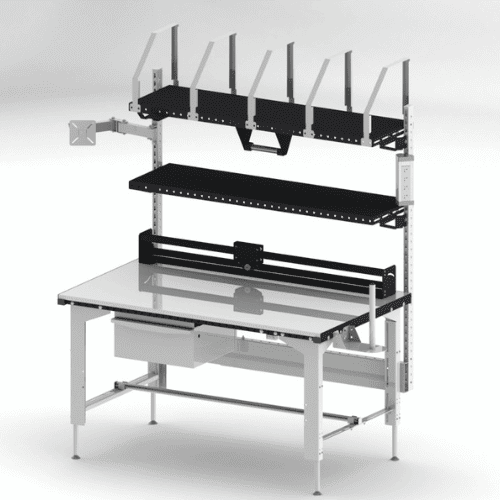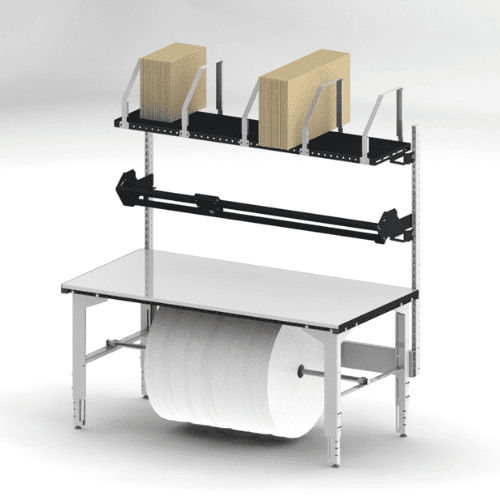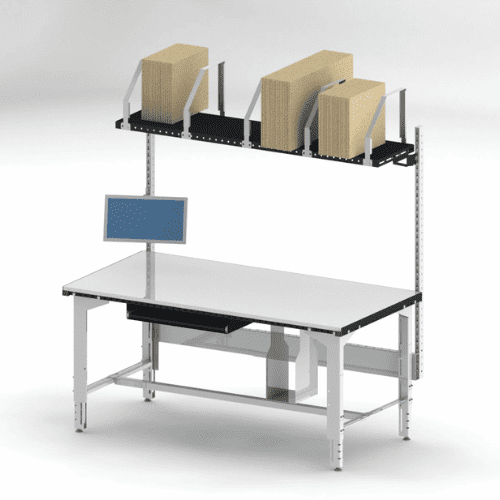


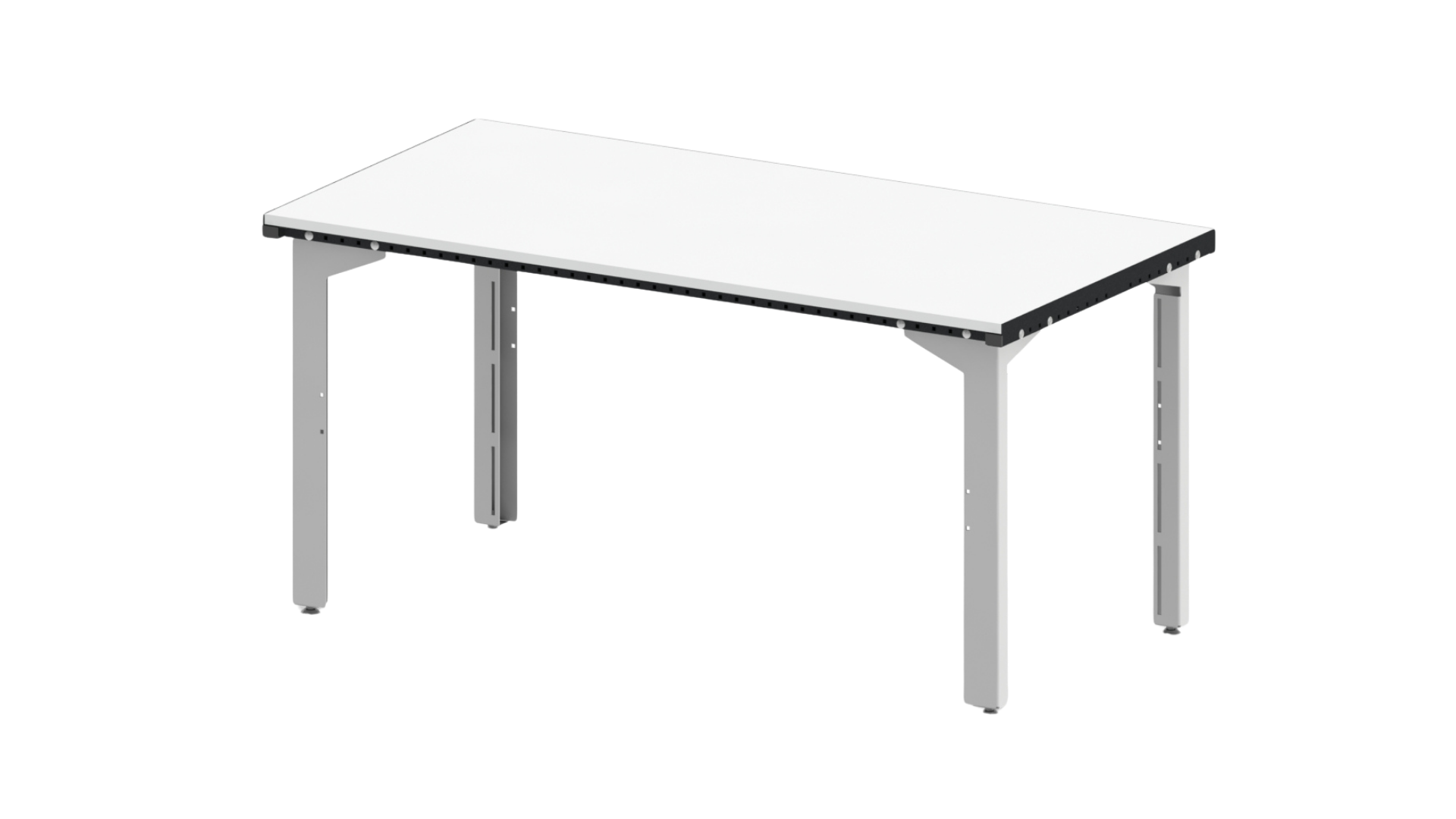
.png)
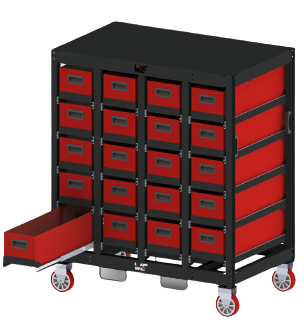
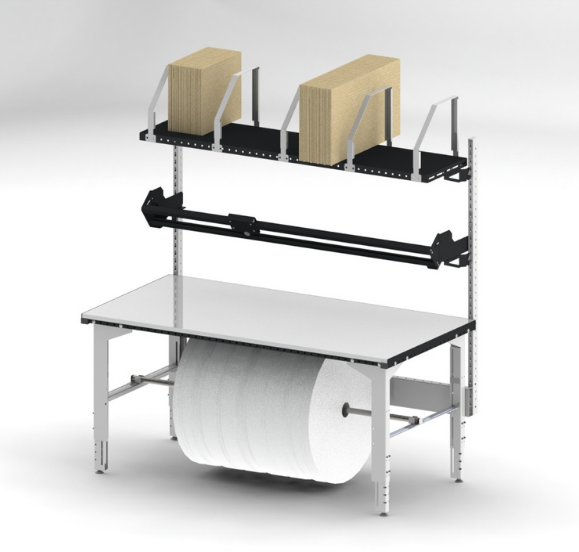
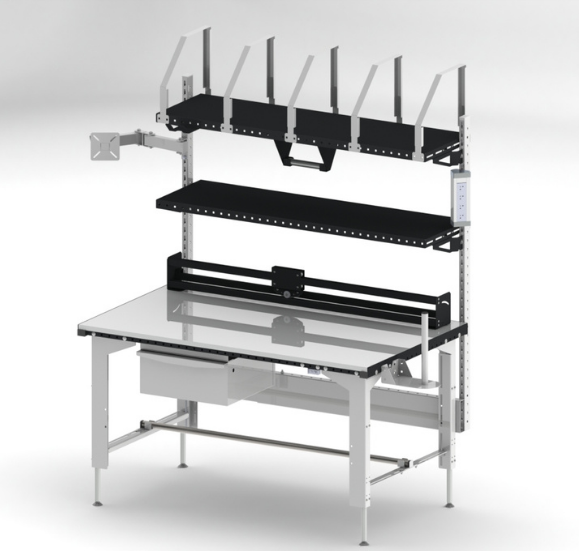
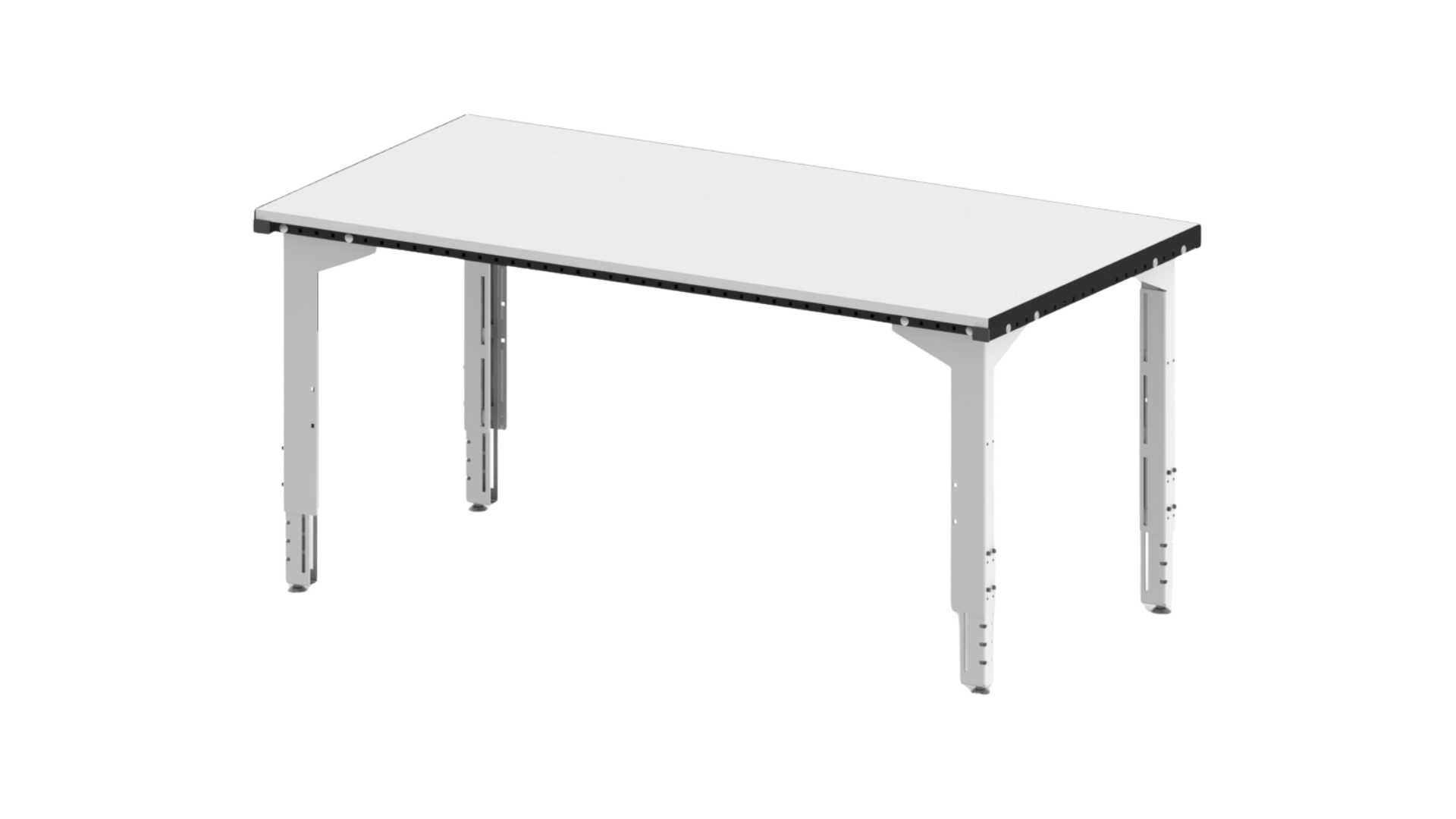
Description
- Welded steel frame
- Load capacity: 450 kg
- Height 890 mm +/- 10 mm thanks to the adjustable feet
- Perforations every 40 mm around the worktop edge for fitting accessories
- White melamine-faced worktop, 22 mm thick
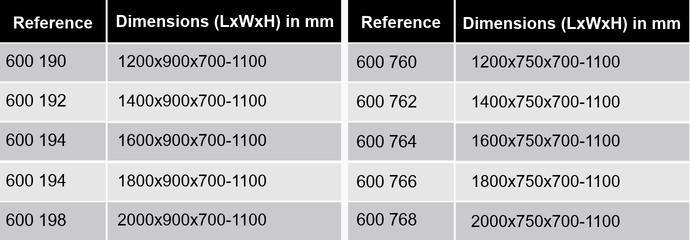
Dimensions
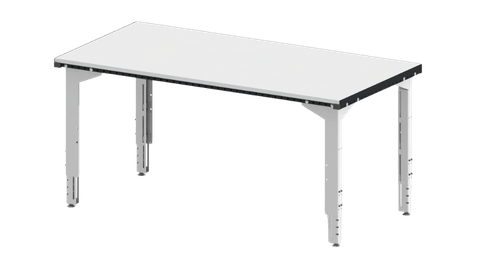
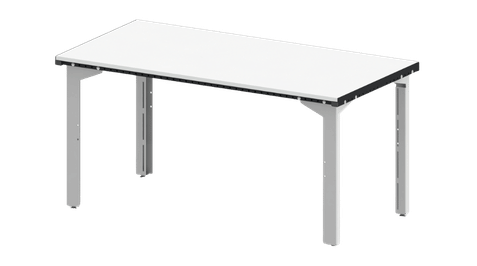
Description
- Welded steel frame
- Load capacity: 450 kg
- Height adjustable from 700 mm to 1,100 mm
- Steel frame around the perimeter, perforated every 40 mm for fitting accessories
- White melamine-faced worktop, 22 mm thick Technical datasheet (PDF)
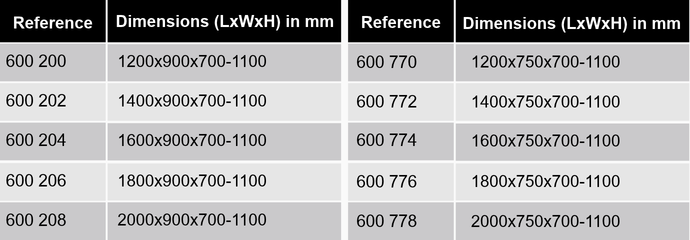
Dimensions
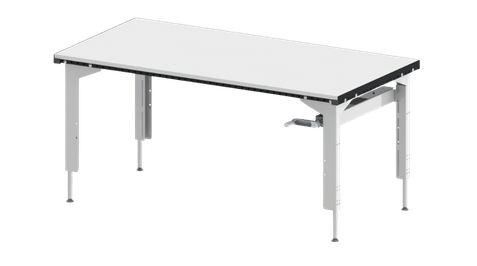
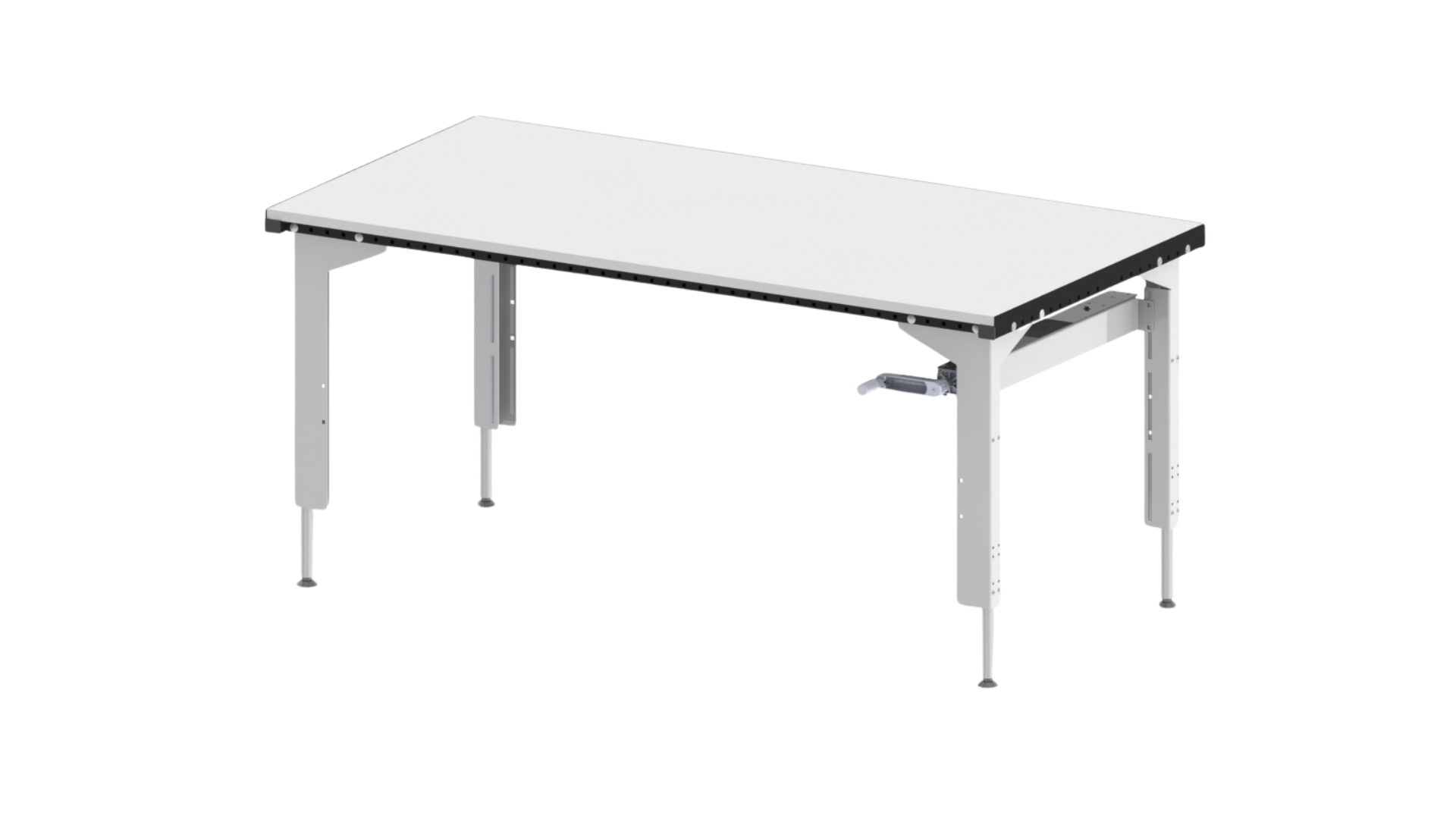
Description
- Welded steel frame
- Load capacity: 300 kg
- Height adjustable from 700 mm to 1,100 mm
- Steel frame around the perimeter, perforated every 40 mm for fitting accessories
- White melamine-faced worktop, 22 mm thick
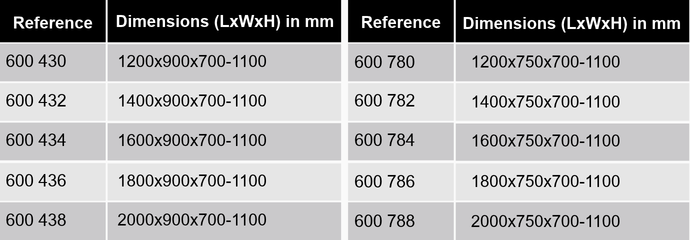
Dimensions
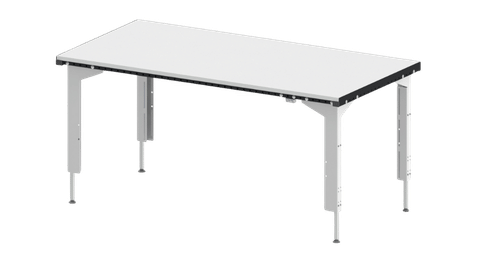
Description
- Welded steel frame
- Load capacity: 450 kg
- Height adjustable from 700 mm to 1,000 mm
- Steel frame around the entire perimeter, perforated every 40 mm for fitting accessories
- White melamine-faced worktop, 22 mm thick
- Optional 6-button remote control (4 memory presets)
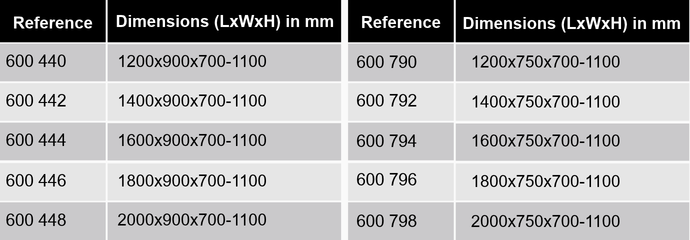
Dimensions

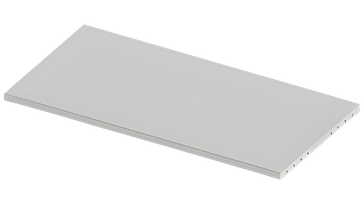
Description
- Available in several lengths to fit the melamine-faced worktop
- Ideal for production workshops in wet or harsh environments with strict hygiene requirements
- Quick and easy to fit onto the existing worktop
- The stainless steel sheet cover allows fast, easy cleaning
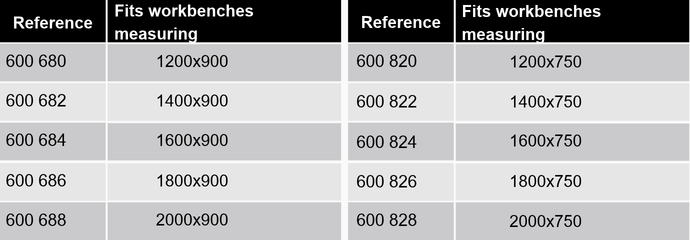
Dimensions
Description
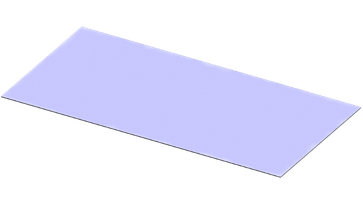
- Available in several lengths to fit the melamine-faced worktop
- Clear PMMA sheet
- Can be screwed, glued or simply laid on the table
- Can also be secured with retaining brackets (optional)
Dimensions
Description
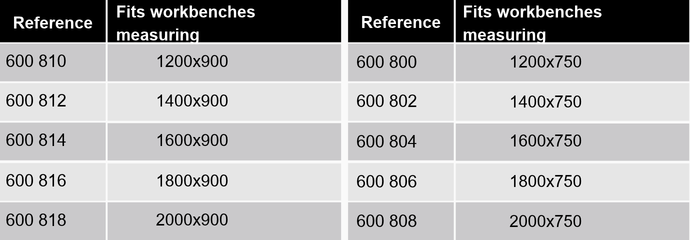
- Available in several lengths to fit the melamine-faced worktop
- Ideal for production workshops in wet or harsh environments with strict hygiene requirements
- Quick and easy to fit onto the existing worktop
- The stainless steel sheet cover allows fast, easy cleaning
Dimensions
Description
- Available in several lengths to fit the melamine-faced worktop
- Clear PMMA sheet
- Can be screwed, glued or simply laid on the table
- Can also be secured with retaining brackets (optional)
Dimensions
Description
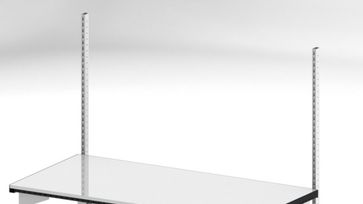
- Suitable for all table sizes and all shelves
- Sold individually
- Available in two heights
- High-resistance light grey RAL 7047 epoxy powder coating
Dimensions

Description
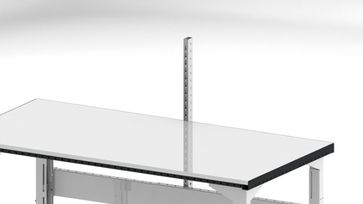
- Suitable for all table sizes and all shelves
- Sold individually
- Available in two heights
- High-resistance light grey RAL 7047 epoxy powder coating
Dimensions

Description
- Suitable for all table sizes and all shelves
- Sold individually
- Available in two heights
- High-resistance light grey RAL 7047 epoxy powder coating
Dimensions
Description
- Suitable for all table sizes and all shelves
- Sold individually
- Available in two heights
- High-resistance light grey RAL 7047 epoxy powder coating
Dimensions
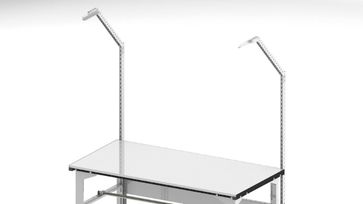
Description
- Pair of uprights for upper frame
- Allows installation of lighting or a tool balancer rail
- Height and depth adjustable position
- High-resistance light grey RAL 7047 epoxy powder coating
Dimensions

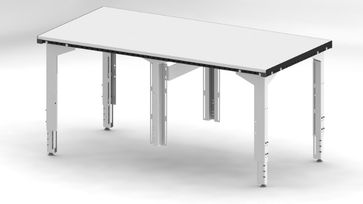
Description
- Pair of lower hangers
- Divides the space under the table into 2 equal zones
- Allows accessories to be fitted
- High-resistance light grey RAL 7047 epoxy powder coating
Dimensions
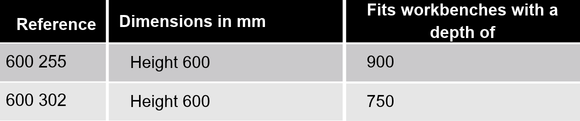
Description
- Pair of uprights for upper frame
- Allows installation of lighting or a tool balancer rail
- Height and depth adjustable position
- High-resistance light grey RAL 7047 epoxy powder coating
Dimensions
Description
- Pair of lower hangers
- Divides the space under the table into 2 equal zones
- Allows accessories to be fitted
- High-resistance light grey RAL 7047 epoxy powder coating
Dimensions
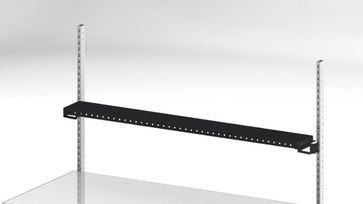
Description
- Load capacity: 60 kg
- Perforations every 40 mm around the perimeter for fitting accessories
- Depth and height adjustable position
- Suitable as a lower or upper shelf
- High-resistance dark grey RAL 7021 epoxy powder coating
Dimensions
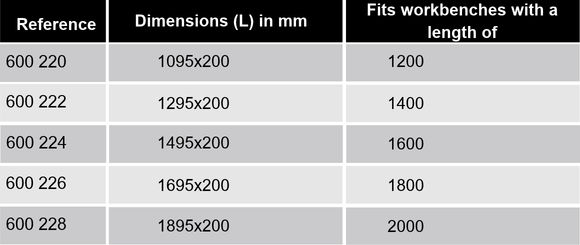
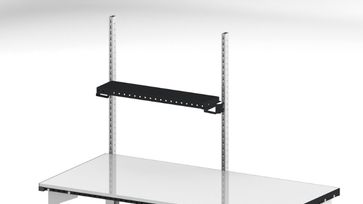
Description
- Load capacity: 60 kg
- Perforations every 40 mm around the perimeter for fitting accessories
- Depth and height adjustable position
- Suitable as a lower or upper shelf
- High-resistance dark grey RAL 7021 epoxy powder coating
Dimensions
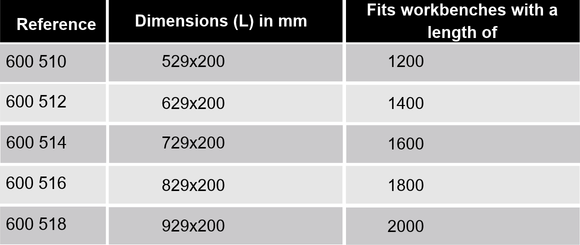
Description
- Load capacity: 60 kg
- Perforations every 40 mm around the perimeter for fitting accessories
- Depth and height adjustable position
- Suitable as a lower or upper shelf
- High-resistance dark grey RAL 7021 epoxy powder coating
Dimensions
Description
- Load capacity: 60 kg
- Perforations every 40 mm around the perimeter for fitting accessories
- Depth and height adjustable position
- Suitable as a lower or upper shelf
- High-resistance dark grey RAL 7021 epoxy powder coating
Dimensions
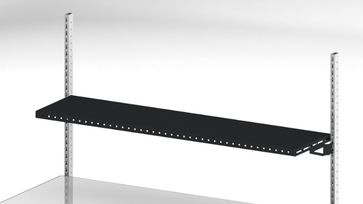
Description
- Load capacity: 60 kg
- Perforations every 40 mm around the perimeter for fitting accessories
- Depth and height adjustable position
- Suitable as a lower or upper shelf
- High-resistance dark grey RAL 7021 epoxy powder coating
Dimensions
Description
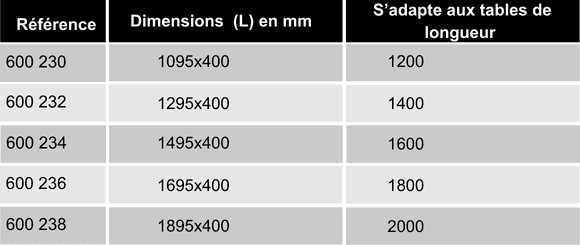
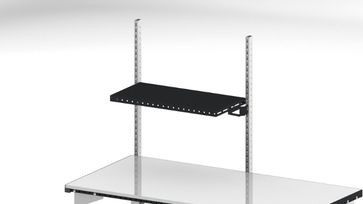
- Load capacity: 60 kg
- Perforations every 40 mm around the perimeter for fitting accessories
- Depth and height adjustable position
- Suitable as a lower or upper shelf
- High-resistance dark grey RAL 7021 epoxy powder coating
Dimensions
Description
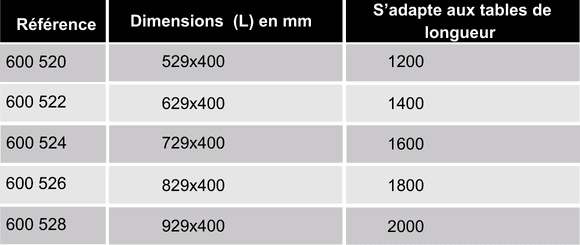
- Load capacity: 60 kg
- Perforations every 40 mm around the perimeter for fitting accessories
- Depth and height adjustable position
- Suitable as a lower or upper shelf
- High-resistance dark grey RAL 7021 epoxy powder coating
Dimensions
Description
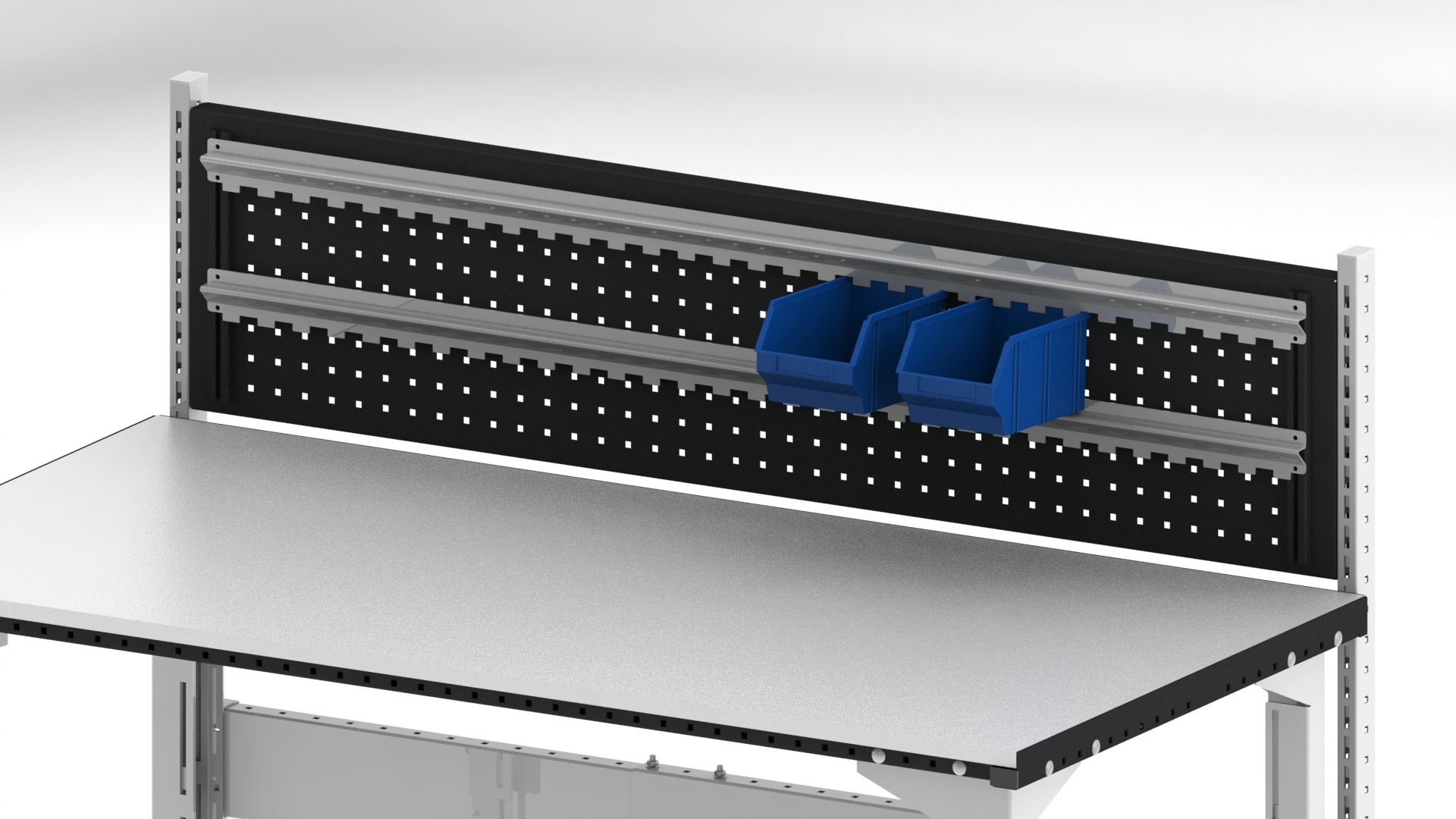
- Load capacity: 60 kg
- Perforations every 40 mm around the perimeter for fitting accessories
- Depth and height adjustable position
- Suitable as a lower or upper shelf
- High-resistance dark grey RAL 7021 epoxy powder coating
Dimensions
Description
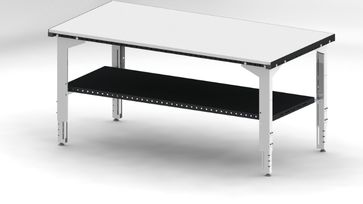
- Load capacity: 60 kg
- Perforations every 40 mm around the perimeter for fitting accessories
- Depth and height adjustable position
- Suitable as a lower or upper shelf
- High-resistance dark grey RAL 7021 epoxy powder coating
Dimensions
Description
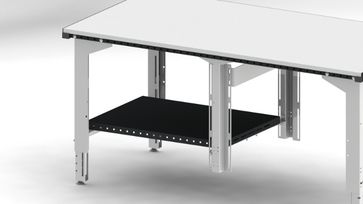
- Load capacity: 60 kg
- Perforations every 40 mm around the perimeter for fitting accessories
- Depth and height adjustable position
- Suitable as a lower or upper shelf
- High-resistance dark grey RAL 7021 epoxy powder coating
Dimensions
Description
- Load capacity: 60 kg
- Perforations every 40 mm around the perimeter for fitting accessories
- Depth and height adjustable position
- Suitable as a lower or upper shelf
- High-resistance dark grey RAL 7021 epoxy powder coating
Dimensions
Description
- Load capacity: 60 kg
- Perforations every 40 mm around the perimeter for fitting accessories
- Depth and height adjustable position
- Suitable as a lower or upper shelf
- High-resistance dark grey RAL 7021 epoxy powder coating
Dimensions
Description
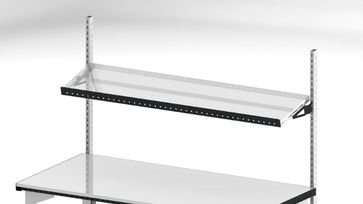
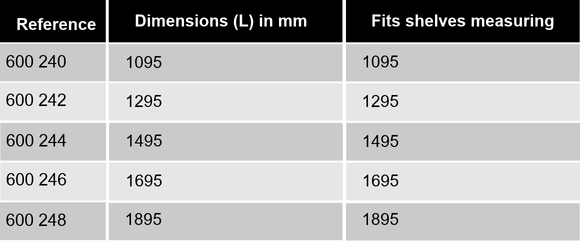
- Stop protrudes 20 mm above the shelf
- Perforations every 40 mm for fitting accessorie
- Can be fitted at the front or rear of the shelf
- High-resistance dark grey RAL 7021 epoxy powder coating
Dimensions
Description
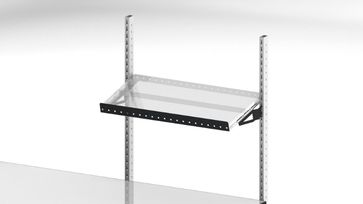
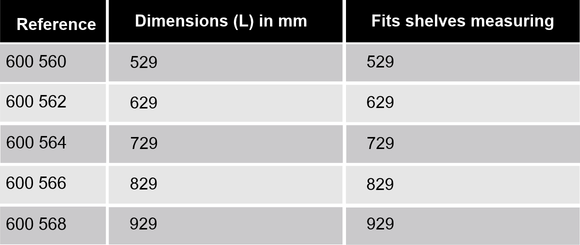
- Stop protrudes 20 mm above the shelf
- Perforations every 40 mm for fitting accessories
- Can be fitted at the front or rear of the shelf
- High-resistance dark grey RAL 7021 epoxy powder coating
- Fits half shelves
Dimensions
Description
- Stop protrudes 20 mm above the shelf
- Perforations every 40 mm for fitting accessorie
- Can be fitted at the front or rear of the shelf
- High-resistance dark grey RAL 7021 epoxy powder coating
Dimensions
Description
- Stop protrudes 20 mm above the shelf
- Perforations every 40 mm for fitting accessories
- Can be fitted at the front or rear of the shelf
- High-resistance dark grey RAL 7021 epoxy powder coating
- Fits half shelves
Dimensions
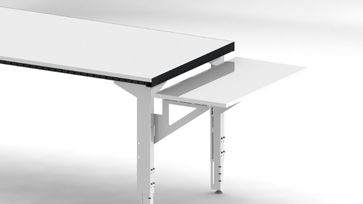
Description
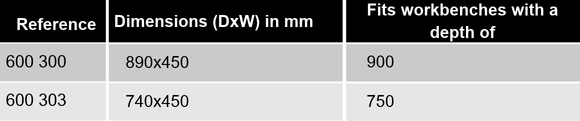
- Fits on the right or left side of the table
- Position adjustable along the legs
- Load capacity: 60 kg
- High-resistance light grey RAL 7047 epoxy powder coating
Dimensions
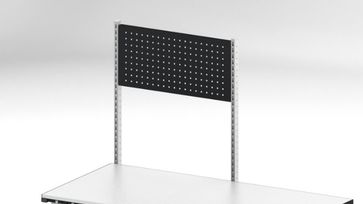
Description
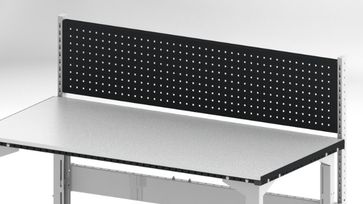
- Allows various accessories to be fitted
- 9x9 mm square perforations
- 40 mm centre-to-centre spacing
- High-resistance dark grey RAL 7021 epoxy powder coating
- Fits the uprights
Dimensions
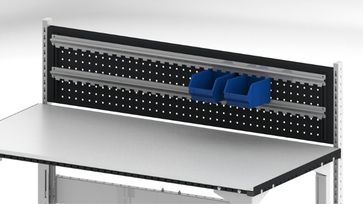
Description
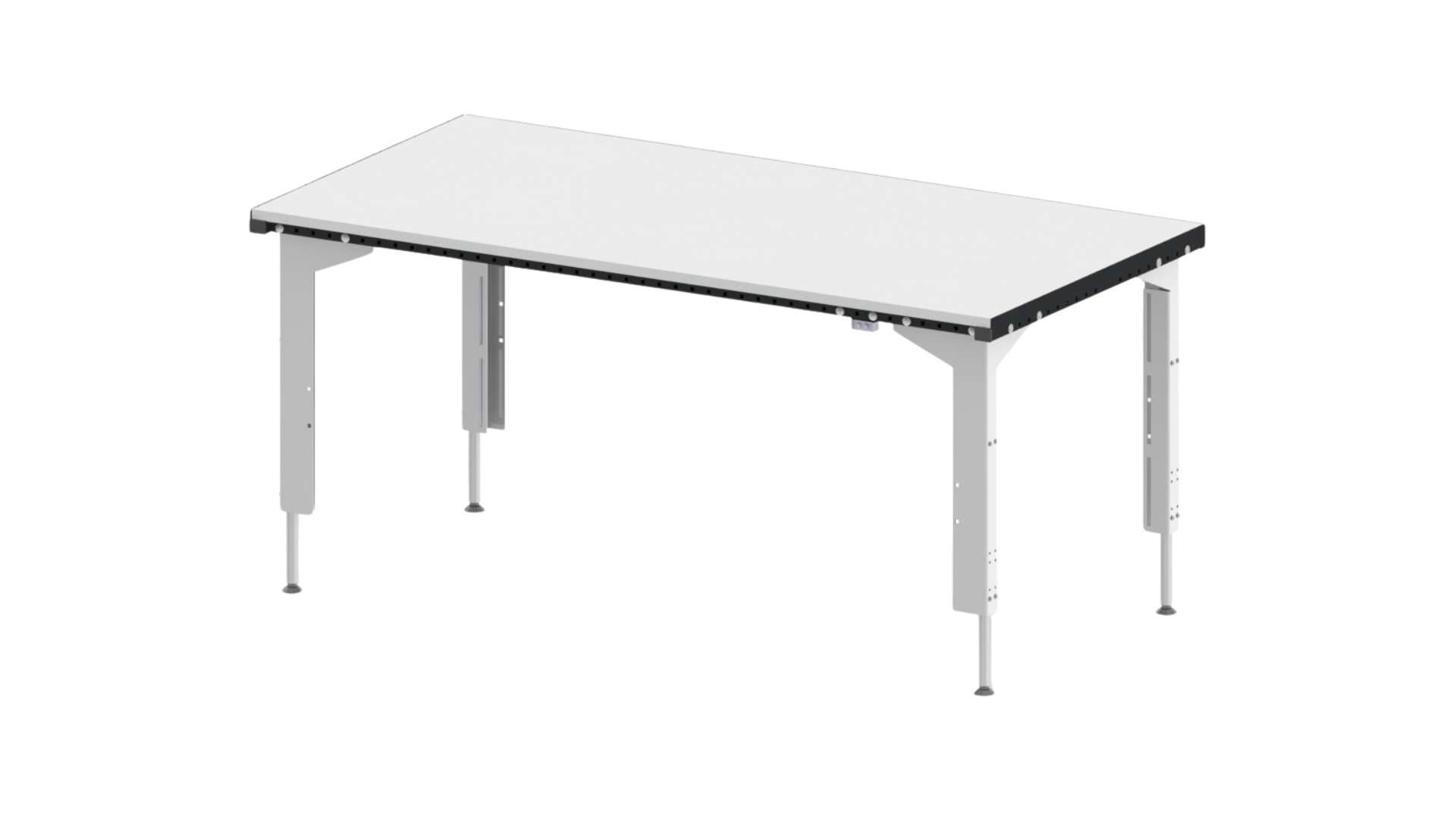
- Allows various accessories to be fitted
- 9x9 mm square perforations
- 40 mm centre-to-centre spacing
- High-resistance dark grey RAL 7021 epoxy powder coating
- Fits the uprights
Dimensions
Description
- Allows various accessories to be fitted
- 9x9 mm square perforations
- 40 mm centre-to-centre spacing
- High-resistance dark grey RAL 7021 epoxy powder coating
- Fits the uprights
Dimensions
Description
- Allows various accessories to be fitted
- 9x9 mm square perforations
- 40 mm centre-to-centre spacing
- High-resistance dark grey RAL 7021 epoxy powder coating
- Fits the uprights
Dimensions
Description
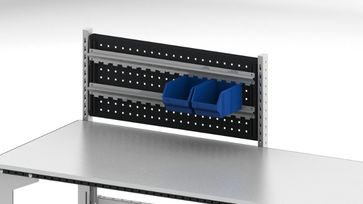
- Fits onto a perforated back panel
- Holds three bin sizes:
175x105x75 mm
245x150x130 mm
355x210x160 mm
- High-resistance light grey RAL 7047 epoxy powder coating
Dimensions
Description
- Fits onto a perforated back panel
- Holds three bin sizes:
175x105x75 mm
245x150x130 mm
355x210x160 mm
- High-resistance light grey RAL 7047 epoxy powder coating
Dimensions
Description
- Fits onto a perforated back panel
- Holds three bin sizes:
175x105x75 mm
245x150x130 mm
355x210x160 mm
- High-resistance light grey RAL 7047 epoxy powder coating
Dimensions
Description
- Fits onto a perforated back panel
- Holds three bin sizes:
175x105x75 mm
245x150x130 mm
355x210x160 mm
- High-resistance light grey RAL 7047 epoxy powder coating
Dimensions
Description
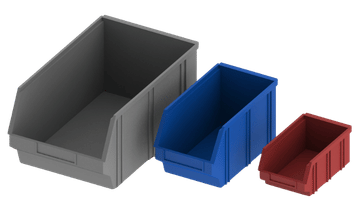
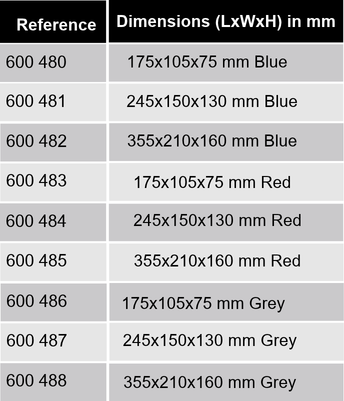
- Stackable picking bin
- Resistant to acids and solvents
- Front label holder for identification
Dimensions
Description
- Fits on the front or rear of the shelves
- High-resistance light grey RAL 7047 epoxy powder coating
Dimensions
Description
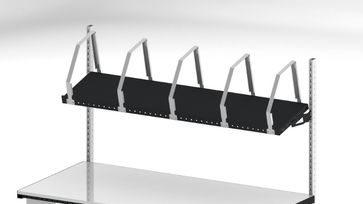
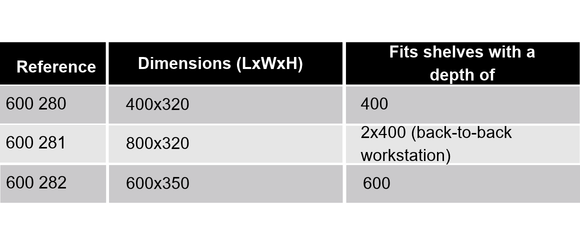
- Holds 3 standard A4 trays
- Requires a 400 mm deep shelf
- High-resistance dark grey RAL 7021 epoxy powder coating
Dimensions

Description
- Fits on the front or rear of the shelves
- High-resistance light grey RAL 7047 epoxy powder coating
Dimensions
Description
- Holds 3 standard A4 trays
- Requires a 400 mm deep shelf
- High-resistance dark grey RAL 7021 epoxy powder coating
Dimensions
Description
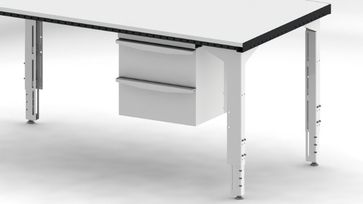
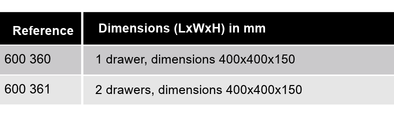
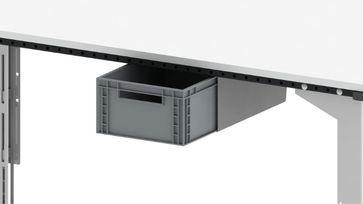
- Fits under the worktop
- Sheet steel construction
- Full-extension drawers
- High-resistance light grey RAL 7047 epoxy powder coating
Dimensions
Description
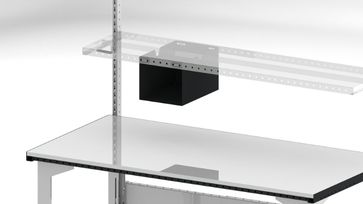
- The steel holder fits under the table
- Position adjustable along the table
- Removable 15 L bin
Dimensions

Description
- Fits under the worktop
- Sheet steel construction
- Full-extension drawers
- High-resistance light grey RAL 7047 epoxy powder coating
Dimensions
Description
- The steel holder fits under the table
- Position adjustable along the table
- Removable 15 L bin
Dimensions
Description
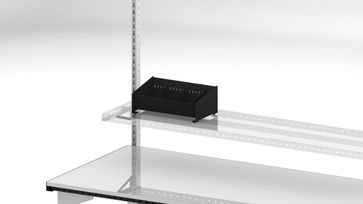
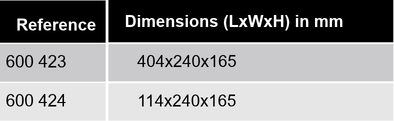
- Large-format label holder: Usable width 400 mm
- For rolls up to Ø180 mm
- Supplied with 3 dividers
- Divider positions adjustable in 20 mm steps
- Small-format label holder: Usable width 110 mm
- For rolls up to Ø180 mm
- High-resistance dark grey RAL 7021 epoxy powder coating
Dimensions
Description
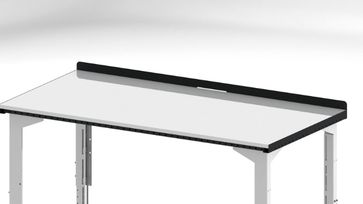
- Protrudes 50 mm above the worktop
- High-resistance dark grey RAL 7021 epoxy powder coating
Dimensions
Description
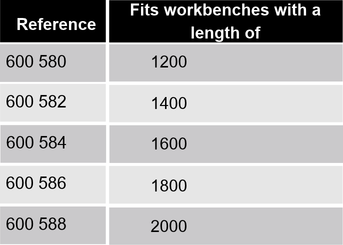
- Large-format label holder: Usable width 400 mm
- For rolls up to Ø180 mm
- Supplied with 3 dividers
- Divider positions adjustable in 20 mm steps
- Small-format label holder: Usable width 110 mm
- For rolls up to Ø180 mm
- High-resistance dark grey RAL 7021 epoxy powder coating
Dimensions
Description
- Protrudes 50 mm above the worktop
- High-resistance dark grey RAL 7021 epoxy powder coating
Dimensions
Description
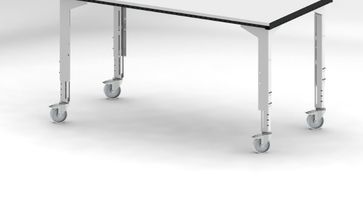
- Diameter 125 mm
- 2 braked casters and 2 non-braked casters
- Non-marking tyres
- Casters increase the table's minimum/maximum height by 150 mm
- Load capacity: 300 kg
Dimensions

Description
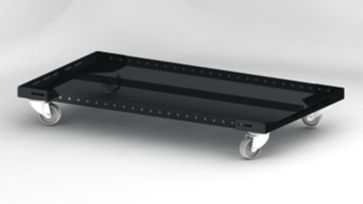
- Fits under a shelf
- 4 swivel casters
- Ø80 mm casters with non-marking tyres
- Sold in pairs
- High-resistance dark grey RAL 7021 epoxy powder coating
Dimensions
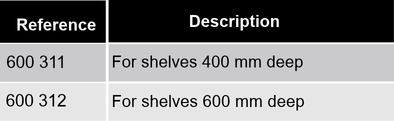
Description
- Diameter 125 mm
- 2 braked casters and 2 non-braked casters
- Non-marking tyres
- Casters increase the table's minimum/maximum height by 150 mm
- Load capacity: 300 kg
Dimensions
Description
- Fits under a shelf
- 4 swivel casters
- Ø80 mm casters with non-marking tyres
- Sold in pairs
- High-resistance dark grey RAL 7021 epoxy powder coating
Dimensions
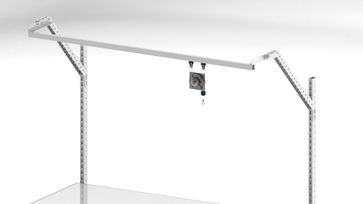
Description
- Suspends a tool weighing 400 g to 1 kg
- Adjustable return tension
- High-resistance light grey RAL 7047 epoxy powder coating
Dimensions
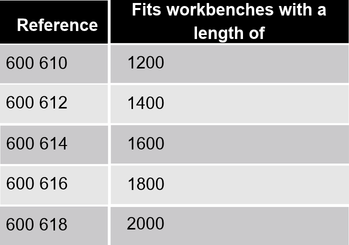
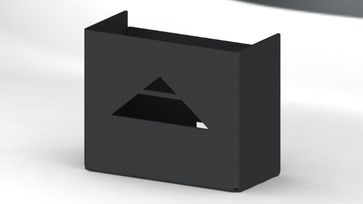
Description
- Fits onto a perforated back panel
- High-resistance RAL 7021 epoxy powder coating
Dimensions

Description
- Suspends a tool weighing 400 g to 1 kg
- Adjustable return tension
- High-resistance light grey RAL 7047 epoxy powder coating
Dimensions
Description
- Fits onto a perforated back panel
- High-resistance RAL 7021 epoxy powder coating
Dimensions
Description
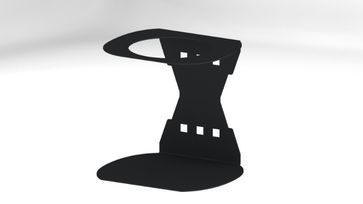
- Fits onto a perforated back panel, an upright or the side of a table
- Height 140 mm
Dimensions

Description
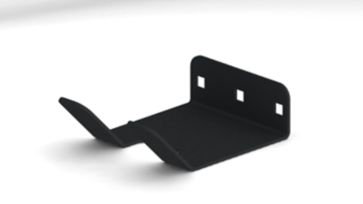
- Fits onto a perforated back panel
- For A4 documents
- High-resistance RAL 7021 epoxy powder coating
Dimensions

Description
- Fits onto a perforated back panel, an upright or the side of a table
- Height 140 mm
Dimensions
Description
- Fits onto a perforated back panel
- For A4 documents
- High-resistance RAL 7021 epoxy powder coating
Dimensions
Description
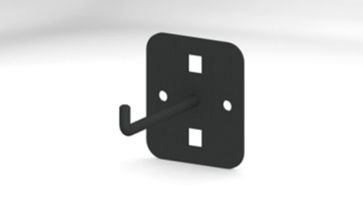
- Fits onto a perforated back panel
- High-resistance RAL 7021 epoxy powder coating
Dimensions
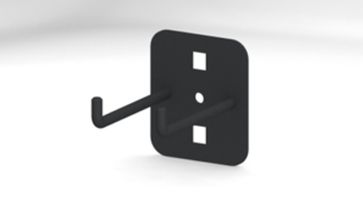
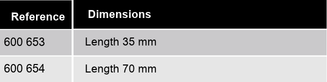
Description
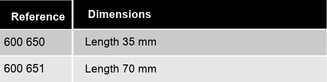
- Fits onto a perforated back panel
- High-resistance RAL 7021 epoxy powder coating
Dimensions
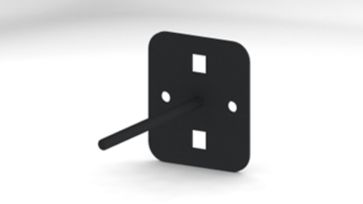
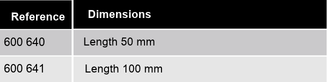
Description
- Fits onto a perforated back panel
- High-resistance RAL 7021 epoxy powder coating
Dimensions
Description
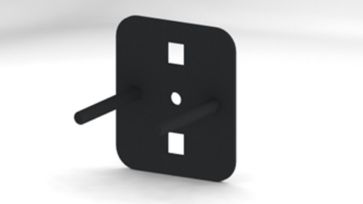
- Fits onto a perforated back panel
- High-resistance RAL 7021 epoxy powder coating
Dimensions
Description
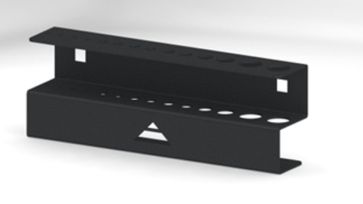
- Fits onto a perforated back panel
- Holder for 14 drill bits: 2x Ø3 - 2x Ø4.2 - 2x Ø6.5 - 2x Ø7.5 - 2x Ø8.5 - 1x Ø10.5 - 1x Ø12.5 - 2x Ø16.5 mm
- High-resistance RAL 7021 epoxy powder coating
Dimensions

Description
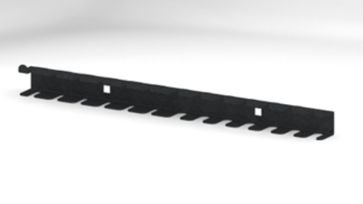
- Fits onto a perforated back panel
- Holder for 13 screwdrivers
- High-resistance RAL 7021 epoxy powder coating
Dimensions

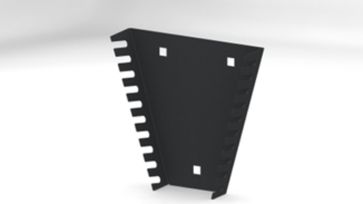
Description
- Fits onto a perforated back panel
- Holder for 10 wrenches
- High-resistance RAL 7021 epoxy powder coating
Dimensions

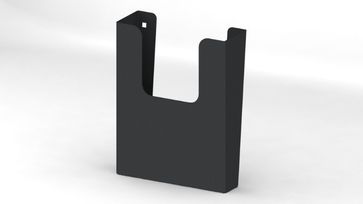
Description
- Fits onto a perforated back panel
- For A4 documents
- High-resistance RAL 7021 epoxy powder coating
Dimensions
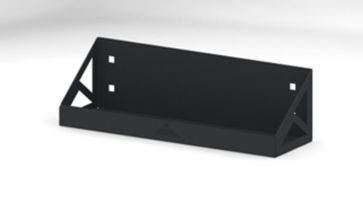
Description
- Fits onto a perforated back panel
- High-resistance RAL 7021 epoxy powder coating
Dimensions

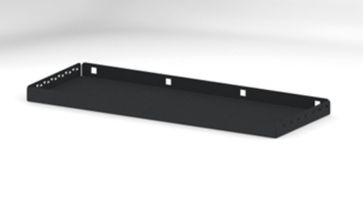
Description
- Fits onto a perforated back panel
- For A4 documents
- High-resistance RAL 7021 epoxy powder coating
Dimensions

Description
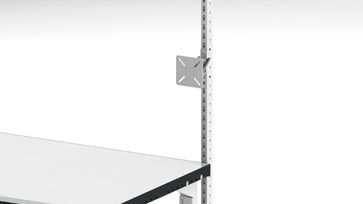
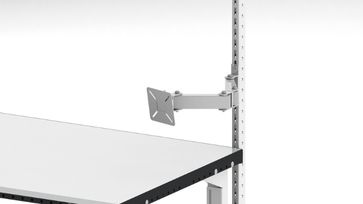
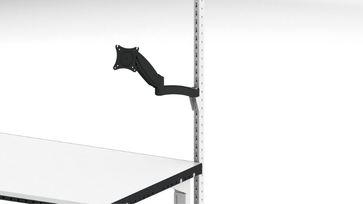
- Allows mounting of monitors with VESA 75 and 100 standards
- Position adjustable along the full height of the uprights
- Horizontal and vertical screen tilt adjustment
- Position locked by indexable handle
- High-resistance light grey RAL 7047 epoxy powder coating
Dimensions
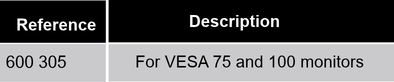
Description
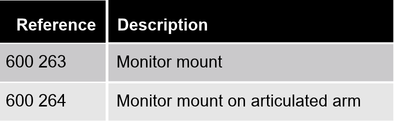
- Allows mounting of monitors with VESA 75 and 100 standards
- Position adjustable along the full height of the uprights
- Horizontal and vertical screen tilt adjustment
- Tool-free height and tilt adjustment
Dimensions
Description
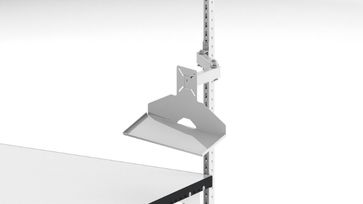
- Allows mounting of monitors with VESA 75 and 100 standards
- Position adjustable along the full height of the uprights
- Horizontal and vertical screen tilt adjustment
- Position locked by indexable handle
- High-resistance light grey RAL 7047 epoxy powder coating
Dimensions
Description
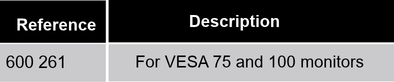
- Allows mounting of monitors with VESA 75 and 100 standards
- Position adjustable along the full height of the uprights
- Horizontal and vertical screen tilt adjustment
- Tool-free height and tilt adjustment
Dimensions
Description
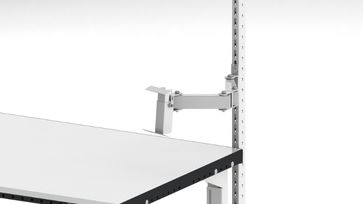
- Allows installation of a keyboard and a monitor with VESA 75 and 100 standards
- Tray dimensions: (L) 500 mm x (W) 150 mm
- Position adjustable along the full height of the uprights
- Horizontal and vertical tilt adjustment of the holder
- Position locked by indexable handle
- High-resistance light grey RAL 7047 epoxy powder coating
Dimensions
Description
- Jaw opening: min. 120 mm, max. 210 mm
- Position adjustable along the full height of the uprights
- Horizontal and vertical screen tilt adjustment
- Position locked by indexable handle
- High-resistance light grey RAL 7047 epoxy powder coating
Dimensions
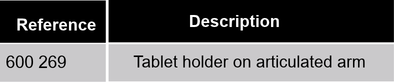
Description
- Allows installation of a keyboard and a monitor with VESA 75 and 100 standards
- Tray dimensions: (L) 500 mm x (W) 150 mm
- Position adjustable along the full height of the uprights
- Horizontal and vertical tilt adjustment of the holder
- Position locked by indexable handle
- High-resistance light grey RAL 7047 epoxy powder coating
Dimensions
Description
- Jaw opening: min. 120 mm, max. 210 mm
- Position adjustable along the full height of the uprights
- Horizontal and vertical screen tilt adjustment
- Position locked by indexable handle
- High-resistance light grey RAL 7047 epoxy powder coating
Dimensions
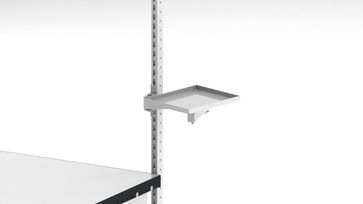
Description
- 360° swivel tray
- Position adjustable along the full height of the uprights
- High-resistance light grey RAL 7047 epoxy powder coating
Dimensions
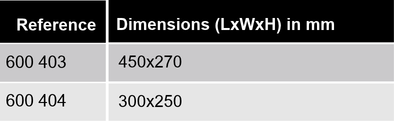
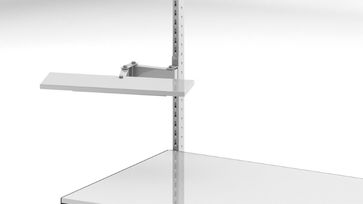
Description
- 360° swivel tray
- Position adjustable along the full height of the uprights
- Tray dimensions: (L) 617 mm x (W) 200 mm
- High-resistance dark grey RAL 7047 epoxy powder coating
Dimensions
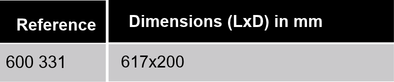
Description
- 360° swivel tray
- Position adjustable along the full height of the uprights
- High-resistance light grey RAL 7047 epoxy powder coating
Dimensions
Description
- 360° swivel tray
- Position adjustable along the full height of the uprights
- Tray dimensions: (L) 617 mm x (W) 200 mm
- High-resistance dark grey RAL 7047 epoxy powder coating
Dimensions
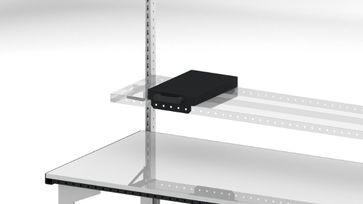
Description
- Load capacity: 40 kg
- Full-extension drawer
- Ergonomic grip handle
- Easy loading/unloading of consumables
- High-resistance dark grey RAL 7021 epoxy powder coating
Dimensions
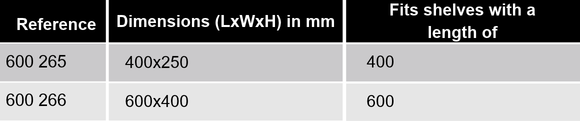
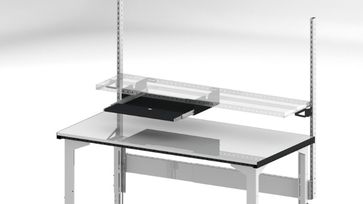
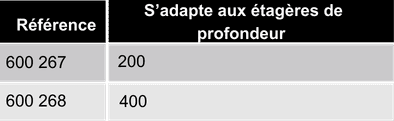
Description
- Fits under a 200 mm or 400 mm shelf
- Position adjustable along the shelf
- Tray dimensions: (L) 615 mm x (W) 200 mm
- Mounted on slides
- High-resistance dark grey RAL 7021 epoxy powder coating
Dimensions
Description
- Load capacity: 40 kg
- Full-extension drawer
- Ergonomic grip handle
- Easy loading/unloading of consumables
- High-resistance dark grey RAL 7021 epoxy powder coating
Dimensions
Description
- Fits under a 200 mm or 400 mm shelf
- Position adjustable along the shelf
- Tray dimensions: (L) 615 mm x (W) 200 mm
- Mounted on slides
- High-resistance dark grey RAL 7021 epoxy powder coating
Dimensions
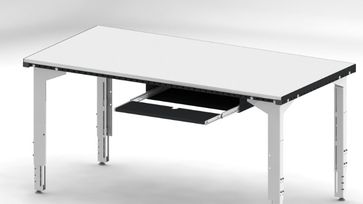
Description
- Fits under the tabletop
- Position adjustable along the table
- Tray dimensions: (L) 615 mm x (W) 200 mm
- Mounted on slides
- High-resistance dark grey RAL 7021 epoxy powder coating
Dimensions

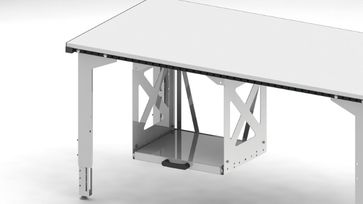
Description
- Fits under the tabletop
- On full-extension slide
- High-resistance light grey RAL 7047 epoxy powder coating
Dimensions
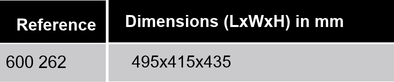
Description
- Fits under the tabletop
- Position adjustable along the table
- Tray dimensions: (L) 615 mm x (W) 200 mm
- Mounted on slides
- High-resistance dark grey RAL 7021 epoxy powder coating
Dimensions
Description
- Fits under the tabletop
- On full-extension slide
- High-resistance light grey RAL 7047 epoxy powder coating
Dimensions
Description
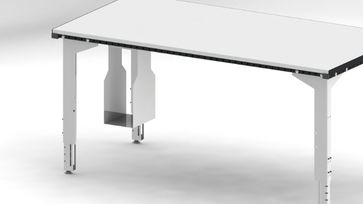
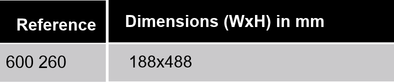
- Fits under the table
- High-resistance light grey RAL 7047 epoxy powder coating
Dimensions
Description
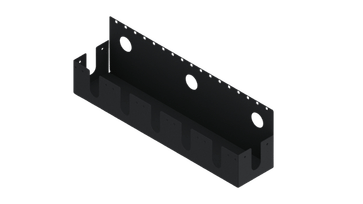
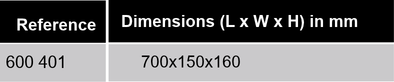
- Fits under the table
- Perforations for cable routing, plus small perforations for adding cable ties
Dimensions
Description
- Fits under the table
- High-resistance light grey RAL 7047 epoxy powder coating
Dimensions
Description
- Fits under the table
- Perforations for cable routing, plus small perforations for adding cable ties
Dimensions
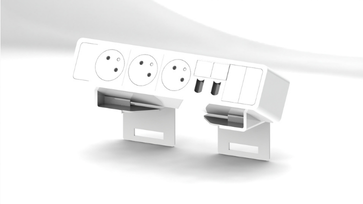
Description
- Aluminium housing
- Supplied with mounting plate
- Made in France
Dimensions
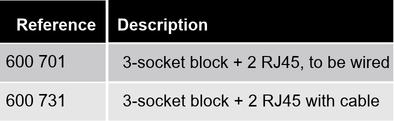
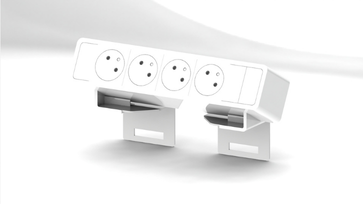
Description
- Aluminium housing
- Supplied with mounting plate
- Made in France
Dimensions
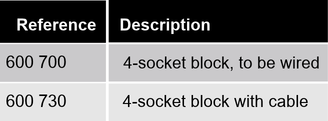
Description
- Aluminium housing
- Supplied with mounting plate
- Made in France
Dimensions
Description
- Aluminium housing
- Supplied with mounting plate
- Made in France
Dimensions
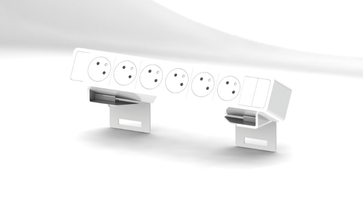
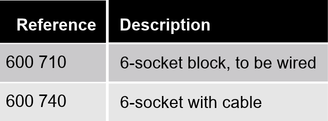
Description
- Aluminium housing
- Supplied with mounting plate
- Made in France
Dimensions
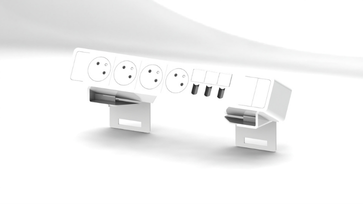
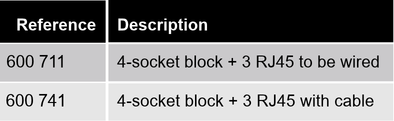
Description
- Aluminium housing
- Supplied with mounting plate
- Made in France
Dimensions
Description
- Aluminium housing
- Supplied with mounting plate
- Made in France
Dimensions
Description
- Aluminium housing
- Supplied with mounting plate
- Made in France
Dimensions
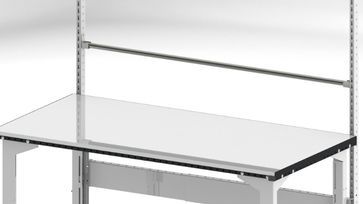
Description
- To be installed above the worktop
- Ø30 mm stainless steel tube
- High-resistance light grey RAL 7047 epoxy powder coating
Dimensions
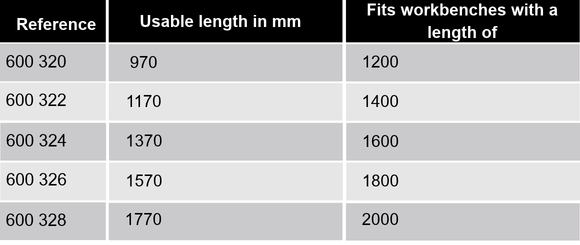
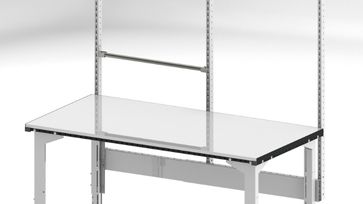
Description
- To be installed above the worktop
- Ø30 mm stainless steel tube
- High-resistance light grey RAL 7047 epoxy powder coating
Dimensions
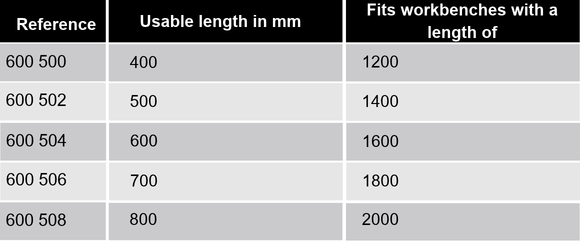
Description
- To be installed above the worktop
- Ø30 mm stainless steel tube
- High-resistance light grey RAL 7047 epoxy powder coating
Dimensions
Description
- To be installed above the worktop
- Ø30 mm stainless steel tube
- High-resistance light grey RAL 7047 epoxy powder coating
Dimensions
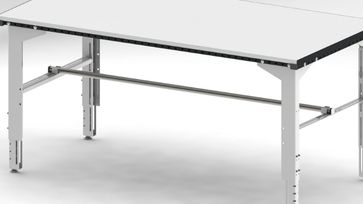
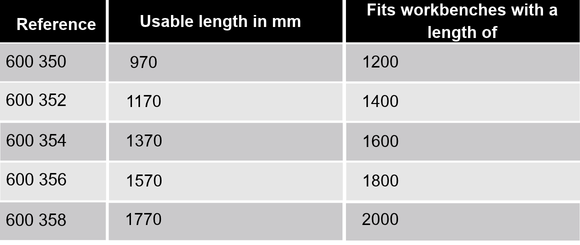
Description
- To be installed below the worktop
- Ø30 mm stainless steel tube
- High-resistance light grey RAL 7047 epoxy powder coating
Dimensions
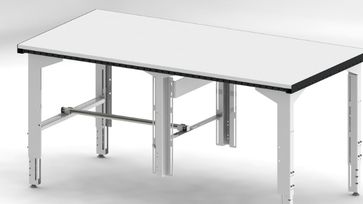
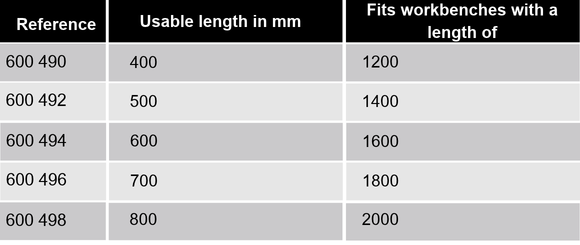
Description
- To be installed below the worktop
- Ø30 mm stainless steel tube
- High-resistance light grey RAL 7047 epoxy powder coating
Dimensions
Description
- To be installed below the worktop
- Ø30 mm stainless steel tube
- High-resistance light grey RAL 7047 epoxy powder coating
Dimensions
Description
- To be installed below the worktop
- Ø30 mm stainless steel tube
- High-resistance light grey RAL 7047 epoxy powder coating
Dimensions
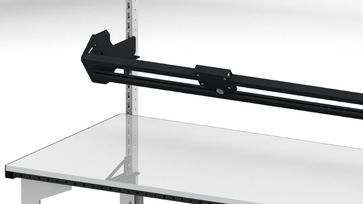
Description
- Position adjustable along the full height of the uprights
- Device tilts towards the operator up to 40°
- Can be screwed onto the worktop
- 2 blade types: for kraft paper or for bubble wrap
- High-resistance dark grey RAL 7021 epoxy powder coating
Dimensions
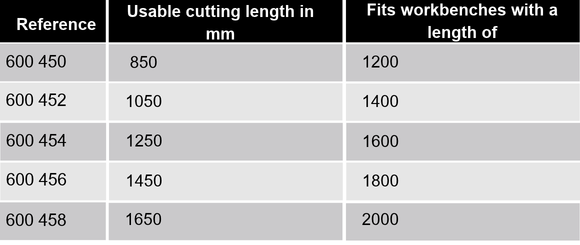
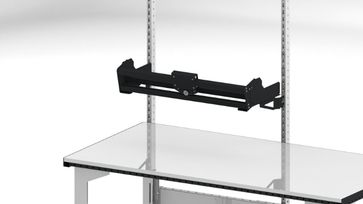
Description
- Position adjustable along the full height of the uprights
- Device tilts towards the operator up to 40°
- Can be screwed onto the worktop
- 2 blade types: for kraft paper or for bubble wrap
- High-resistance dark grey RAL 7021 epoxy powder coating
Dimensions
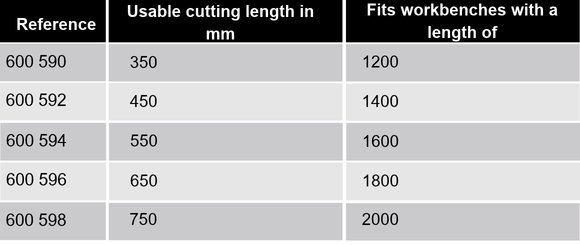
Description
- Position adjustable along the full height of the uprights
- Device tilts towards the operator up to 40°
- Can be screwed onto the worktop
- 2 blade types: for kraft paper or for bubble wrap
- High-resistance dark grey RAL 7021 epoxy powder coating
Dimensions
Description
- Position adjustable along the full height of the uprights
- Device tilts towards the operator up to 40°
- Can be screwed onto the worktop
- 2 blade types: for kraft paper or for bubble wrap
- High-resistance dark grey RAL 7021 epoxy powder coating
Dimensions
Description
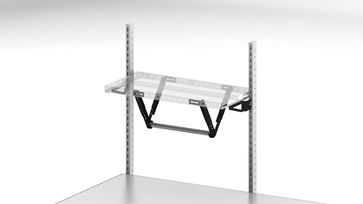
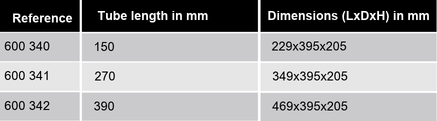
- Fits shelves 400 mm and 600 mm deep
- Removable Ø30 mm stainless steel tube
- Position adjustable along the shelf
- Axis position adjustable in height and depth
Dimensions
Description
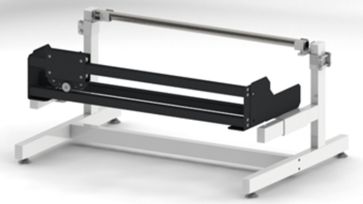
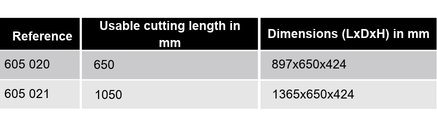
- Suitable for rolls up to Ø750 mm
- 1 Ø30 mm stainless steel tube, height-adjustable
- 1 cutting device
- Usable cutting length: 650 mm or 1,050 mm
- Suitable for bubble wrap, foam film and kraft paper
- Cutting device position adjustable in depth
- Device tilts towards the operator up to 40°
Dimensions
Description
- Fits shelves 400 mm and 600 mm deep
- Removable Ø30 mm stainless steel tube
- Position adjustable along the shelf
- Axis position adjustable in height and depth
Dimensions
Description
- Suitable for rolls up to Ø750 mm
- 1 Ø30 mm stainless steel tube, height-adjustable
- 1 cutting device
- Usable cutting length: 650 mm or 1,050 mm
- Suitable for bubble wrap, foam film and kraft paper
- Cutting device position adjustable in depth
- Device tilts towards the operator up to 40°
Dimensions
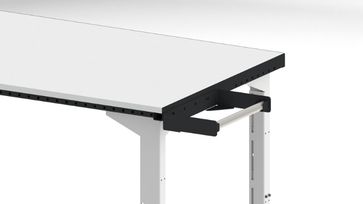
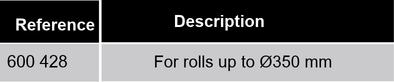
Description
- Fits on the right or left side of the table, on a shelf or on a perforated back panel
- For rolls up to Ø350 mm
- Roll width: 300 mm max.
- Removable Ø30 mm stainless steel tube
- High-resistance dark grey RAL 7021 epoxy powder coating
Dimensions
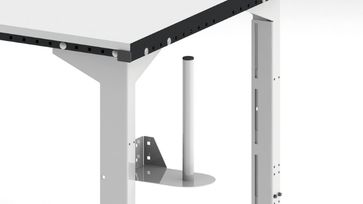
Description
- High-resistance dark grey RAL 7021 epoxy powder coating
- Fits the uprights and lower hangers
Dimensions
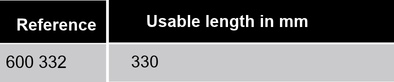
Description
- Fits on the right or left side of the table, on a shelf or on a perforated back panel
- For rolls up to Ø350 mm
- Roll width: 300 mm max.
- Removable Ø30 mm stainless steel tube
- High-resistance dark grey RAL 7021 epoxy powder coating
Dimensions
Description
- High-resistance dark grey RAL 7021 epoxy powder coating
- Fits the uprights and lower hangers
Dimensions
Description
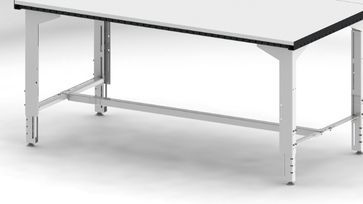
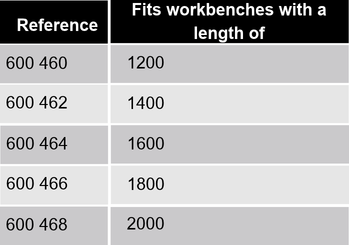
- Height and depth adjustable position
- High-resistance light grey RAL 7047 epoxy powder coating
Dimensions
Description
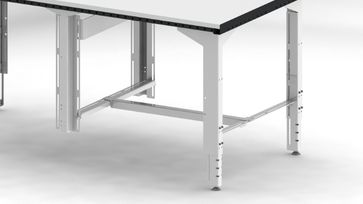
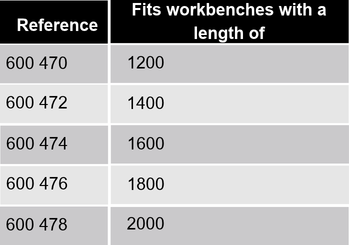
- Height and depth adjustable position
- High-resistance light grey RAL 7047 epoxy powder coating
- Fits the lower hangers
Dimensions
Description
- Height and depth adjustable position
- High-resistance light grey RAL 7047 epoxy powder coating
Dimensions
Description
- Height and depth adjustable position
- High-resistance light grey RAL 7047 epoxy powder coating
- Fits the lower hangers
Dimensions
Description
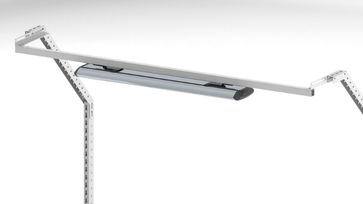
- Steel frame to be fixed onto the uprights, light grey RAL 7047
- 956 mm LED light bar with on/off switch
- Light bar position adjustable in height and depth
- Light type: neutral white (≈ 4000 K) with anti-glare protection
- Options: dimmer button or remote switch
- 3,000 mm power cable, supplied with male/female plugs
Dimensions
Description
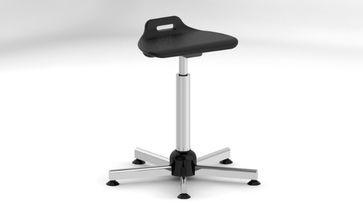
- Swivel sit-stand stool resistant to impacts, cuts, burns, base oils, mild acids and solvents
- Made of durable polyurethane foam
- Height adjustment
- Medium working height
- For worktops from 700 to 950 mm
- Non-slip glides
Information

Description
- Steel frame to be fixed onto the uprights, light grey RAL 7047
- 956 mm LED light bar with on/off switch
- Light bar position adjustable in height and depth
- Light type: neutral white (≈ 4000 K) with anti-glare protection
- Options: dimmer button or remote switch
- 3,000 mm power cable, supplied with male/female plugs
Dimensions
Description
- Swivel sit-stand stool resistant to impacts, cuts, burns, base oils, mild acids and solvents
- Made of durable polyurethane foam
- Height adjustment
- Medium working height
- For worktops from 700 to 950 mm
- Non-slip glides
Information
Description
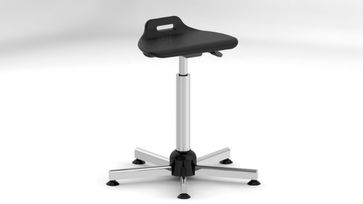
- Swivel sit-stand stool resistant to impacts, cuts, burns, base oils, mild acids and solvents
- Made of durable polyurethane foam
- Height adjustment
- Medium working height
- For worktops from 700 to 950 mm
- Non-slip glides
Information

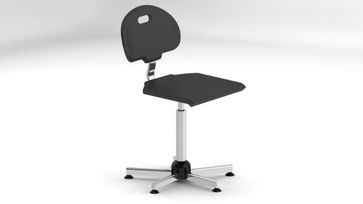
Description
- Industrial chair with backrest resistant to impacts, cuts, burns, base oils, mild acids and solvents
- Made of durable polyurethane foam
- Height-adjustable
- Medium working height
- For worktops from 650 to 850 mm
- Non-slip glides
Informations

Description
- Swivel sit-stand stool resistant to impacts, cuts, burns, base oils, mild acids and solvents
- Made of durable polyurethane foam
- Height adjustment
- Medium working height
- For worktops from 700 to 950 mm
- Non-slip glides
Information
Description
- Industrial chair with backrest resistant to impacts, cuts, burns, base oils, mild acids and solvents
- Made of durable polyurethane foam
- Height-adjustable
- Medium working height
- For worktops from 650 to 850 mm
- Non-slip glides
Informations